What is data security?
Data security is the practice of protecting corporate and customer data against unauthorized use and exposure. It includes everything from discovering the data that a company owns to implementing security controls designed to restrict access to and protect this data. Data security is one of the biggest cybersecurity challenges faced by many businesses. According to Statista, around 15 million data records were exposed globally during the third quarter of 2022 due to data breaches. Comparing this figure to the prior quarter, it had increased by 37%. Recent data breaches range from minor incidents that most people have never heard about to huge-scale incidents like the Equifax breach that exposed financial data for 147 million people.
Why is data security necessary?
Strong data security is important for several different reasons. One of the biggest drivers for investing in data security is minimizing the potential cost and damage caused by a data breach. According to IBM and the Ponemon Institute, the average cost of a data breach is $3.6 million and includes the following types of expenses: Detection and escalation (28.8%) Remediation (6.2%) Ex-post response (25.4%) Lost business cost (39.4%) Of these four categories, the highest cost of poor data security to the business is not cleaning up after the incident occurs. While difficult to measure, the loss of customer trust and future business is a greater expense for the company. Organizations with poor data security are also likely to face regulatory penalties. As data protection regulations like the General Data Protection Regulation (GDPR) and the Health Insurance Portability and Accountability Act (HIPAA) become more stringent, regulators can levy huge fines for failing to comply with requirements even if that non-compliance did not result in a breach. Non-compliance with other regulations, such as the Payment Card Industry Data Security Standard (PCI-DSS), can result in the loss of the right to process credit and debit cards, which significantly impacts an organizations ability to do business.
Types of data security
The objective of data security is to protect sensitive data by minimizing the probability that it will be leaked or exposed to unauthorized users.
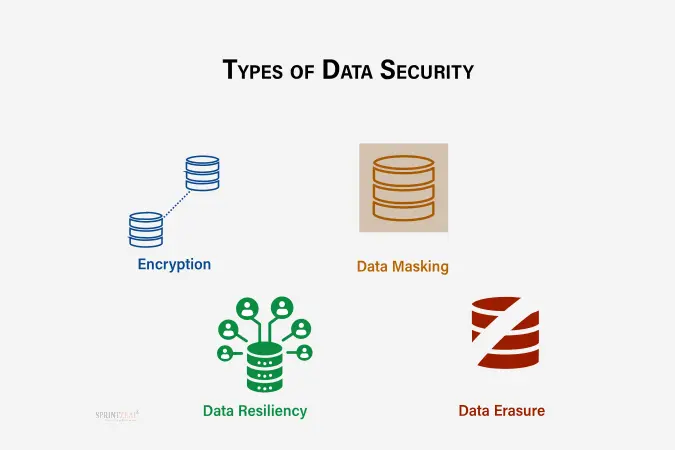
A number of different tools exist for achieving this goal, including:
Encryption
Encryption algorithms make it impossible to read data without access to the proper decryption key. Under many data protection laws, if encrypted data is leaked, but the attacker does not have access to the decryption key, the breach does not need to be reported. Prey can manage BitLocker for Windows 10 devices with a physical Trusted Platform Module (TPM) installed and active. With it, you can select which disks to encrypt and decrypt, check on their progress and use the security standard that best suits your needs.
Data erasure
It is the process of securely deleting sensitive data from storage devices such as hard drives, USB drives, and mobile devices. However, when data is wiped, it is frequently not entirely erased from the device and can sometimes be recovered using special software. Data erasure involves overwriting the existing data with random characters or zeros to make it unrecoverable, preventing unauthorized parties from accessing sensitive data and helping protect against data security threats. Data erasure policies and processes should be implemented mainly by organizations handling sensitive data to prevent data breaches.
Identity access management (IAM)
Access control systems enable an organization to limit users access and permissions to the minimum required for their job role (the principle of least privilege). Implementing IAM decreases the probability and impact of data breaches and is required for compliance with certain data protection regulations (such as PCI-DSS).
Data loss prevention (DLP)
DLP solutions are designed to identify and alert on or block attempted data exfiltration from an organizations network. These systems can be a good last line of defense against data breaches but are most effective when paired with other solutions. They might miss an attempted exfiltration and only come into play once an attacker has already gained access to an organizations data.
Governance, risk, and compliance
Policies and risk assessment procedures are essential for a robust data security strategy. By defining policies regarding data classification, access, and protection for different data types, an organization can reduce its risk of a data breach.
Anti-malware, antivirus, and endpoint protection
Many data breaches are enabled by malware, including ransomware that steals data to force a victim to pay a ransom or info stealer malware that steals user's credentials and data. Installing anti-malware, antivirus, and endpoint protection solutions on devices can help to detect and block attempted data theft by malware. While various solutions exist for implementing data security, different approaches are better at managing different risks. For example, lost or stolen devices have been the source of numerous data breaches. While IAM and DLP solutions have little impact to prevent these types of incidents, they can alert IT employees of any unauthorized behavior and prevent any data leaks by deploying full-disk encryption, device lock, or remote wipe on devices carrying sensitive company or customer data, which can help to mitigate these threats.
Data security threats
Data is everywhere within an organizations network, and it can be put at risk in a number of different ways. Some top threats to data security includeData Loss in the Cloud:
Many organizations are moving to the cloud, but cloud security has consistently lagged. 60% of cloud storage includes unencrypted data, and security misconfigurations in 93% of cloud storage services have caused over 200 data breaches in the last two years. Since these cloud-based resources are directly accessible from the public Internet, this places the data they contain at risk.Phishing and Other Social Engineering Attacks:
Phishing and social engineering attacks are common methods for stealing sensitive data. A malicious email, SMS, social media message, or phone call may attempt to steal sensitive information directly or steal user credentials. These credentials can then access online accounts containing sensitive information, such as cloud-based email or data storage.Accidental Exposure:
Not all data breaches are intentional. According to IBM and the Ponemon Institute, 48% of data breaches are caused by system glitches or human error. This can include everything from an accidental CC on an email to misconfiguring cloud security permissions to leaving a USB drive or printout on the subway.Insider Threats:
The popular conception of data breaches is that outside attackers mainly carry them out. However, insider threats are behind an estimated 60-75% of data breaches. This includes both malicious insiders like rogue employees that still have access to the network and negligent employees that cause accidental data exposures.Ransomware:
Ransomware is a threat to an organizations data in a couple of different ways. All ransomware variants perform data encryption, which makes the data impossible to access without paying the ransom for the decryption key. Some ransomware groups have added a data stealer to their malware, which provides additional leverage when demanding a ransom payment.Physical Hardware Compromise:
All data is stored on physical hardware, which may be the attack's target. . Malicious hardware inserted via a supply chain attack can compromise sensitive data, or an attacker can attempt to read memory directly off of a disk while it is still turned off.Stolen/missing devices:
Working from anywhere can lead to cybersecurity risk since Devices and their sensitive data may get stolen or lost. These devices frequently hold private data that unauthorized people can access if they fall into the wrong hands, including emails, financial information, personal files, and access credentials to company networks and databases which can lead to a serious data breach.Data security vs. data privacy
Data privacy and data security are crucial components of safeguarding sensitive data, but they deal with different issues. Data security is safeguarding information against unauthorized access, theft, destruction, or alteration. To prevent unwanted access and guarantee the confidentiality, integrity, and availability of data, entailing security controls like encryption and monitoring. Data privacy is the term used to describe a person's right to control how their personal information is gathered, utilized, and shared. It includes preventing unauthorized disclosure or misuse of a person's personal information. In conclusion, the main difference is that data privacy focuses on defending a person's right to own their personal information and keep their data confidential. In contrast, data security takes action to prevent unwanted access to said data, protecting it from malicious activity. When handling sensitive data, both are crucial factors for organizations to consider, as failing to do so may have a negative legal and financial impact on the brand.
Data security takeaways
Data security is an ongoing process vital for individuals and organizations to maintain the integrity and confidentiality of their data; keeping on top of changing threats and vulnerabilities requires constant monitoring, upgrading, and training. Therefore, it is essential to develop a data security plan and keep it updated to ensure it complies with your business's evolving needs and legal regulations to prevent data breaches. Data security is not a one-size-fits-all solution. Instead, it requires a customized approach based on each organization's unique needs, risks, and challenges. Every person can contribute to data security through cyber hygiene, which involves using strong passwords, avoiding public Wi-Fi networks, and being vigilant for phishing scams.